
Simply explained, the foundation of induction cooktop is
that a magnetic field is used to generate heat energy in ferrous metal pots and
pans. It is faster than other modes of cooking. Electromagnetic energy is
transferred directly into the metal of the cook-pot. The pot becomes the
heating element. With an induction cooking method, 80 to 90% of its
electromagnetic energy is distributed to the food product in the pan. In
comparison, gas cooking converts only 38 percent of its energy. So, induction
heat transfer is faster than gas.
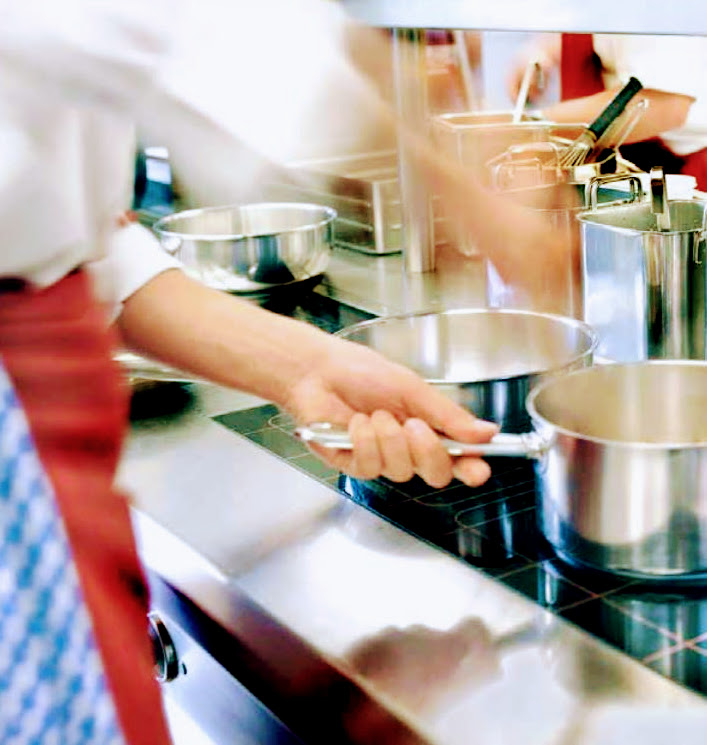
And it is safer, too. With induction cooking, there is no
open flame as found with a gas powered unit. There is not the red-hot heating
element that you would have with an electric range. This feature makes it
impossible for clothes or flammable items to set on fire. It is less likely for
staff members using induction to get equipment burns. Induction units are
actually cool to human touch.
So, you are thinking – what’s the glitch in this set-up? Can
the user rely on getting foods to the desired cooking temperature? Induction
cooking does not compromise the ability for the chef to achieve accurate
temperatures. Actually, induction cooking will get you the desired temp quicker
and keep it accurately where you want it to be. Induction cooking is quite
energy efficient. Estimates are that induction is 85 to 90% efficient. There is
no heat loss because energy is passed directly to the cookware. With gas the
rating is closer to 50%, electric cooktops at 60%. Added bonus: Your kitchen
stays cooler. That heat is not escaping and heating up your workspace, or the
people working them. Less ventilation is needed within your cooking footprint
resulting in energy savings (and less strain on the ventilation systems
itself).
Cleaning is a breeze, simply wipe up any spills off the flat
surface. And you can do that right away, as there are no heated surfaces that
you have to wait to cool down. The surface is not hot at all.
Induction does have this restriction: Not just any pan will
work on an induction cooktop. Since it depends on electromagnetic energy,
glass, cooper and aluminum will not work. Many pots and pans are made
specifically for induction cooking. If your stainless steel cookware is not
marked “induction ready”, you can check if it contains enough ferrous metal by testing
it with a common refrigerator magnet. If it securely sticks to the bottom, it
will be fine to use for induction cooking. Oh, and the bottom needs to be flat
to work on an induction cooktop. Contact with the pan to unit is a must. Cast
iron works excellent on induction.
See for yourself: Check out this short video:
https://www.garland-group.com/Products/Induction/D…
Interested to find out more? Whether you seek info on
the module line shown above, countertop units or rethermalizers, give Globe a
call today and explore how induction can fit into your commercial kitchen. The
benefits of induction are huge: Precision temps, efficiency, speed and energy
savings.
About Garland:
A Welbilt Brand: Garland designs,
manufactures and markets a full line of commercial ranges, ovens, griddles,
grills and commercial counter top cooking equipment. As cooking equipment
innovators, Garland has shown how innovation can lead to radical improvements
that save operators time and money. The latest Garland cooking equipment
meets the demand for Accelerated Cooking in smaller convenient dining
establishments with larger menus